Most auto dealers and service shops spend on marketing without knowing if they'll see a return. You need a budget that fits your revenue, a clear sense of what channels perform, and a way to measure results before you scale.
Understand Your Baseline: What Are You Spending Now
Before you can optimize a marketing budget, you need to know what you're actually spending. Pull together all invoices for the last 12 months: Google Ads, Facebook, email tools, website hosting, print advertising, local event sponsorships, radio, billboards, vehicle wraps, anything tied to getting customers in the door. Add salaries for anyone who spends significant time on marketing, even if it's part of a job title like sales manager or office admin.
Divide that annual total by your annual revenue. If you spent $60,000 and earned $1.2 million in gross revenue, you're spending 5%. If you spent $30,000 on $1 million, that's 3%. This percentage is your current marketing intensity. It isn't inherently good or bad; it just tells you where you stand. The question is whether that money produced enough customer volume to justify the expense.
Most auto retailers find they're spending on multiple channels without any measurement. Some channels may be profitable, others may be just habit. The goal of this exercise is to create clarity so you can make intentional cuts and investments.
Map Revenue to Each Marketing Channel
The hardest part of ROI is attribution. Unlike e-commerce (where every purchase has a click trail), auto service and sales happen offline. Someone may see a Facebook ad, then call a week later, or walk in after seeing your storefront. You need systems to trace the path.
Start with your most measurable channels. If you run Google Ads or Facebook ads, those platforms will tell you how many clicks and conversions (form fills, phone calls, website visits) each generated. Set up a unique phone number or landing page for each major channel. When a customer calls the dedicated number, you know they came from that source. Train your staff to ask every customer how they heard about you. Write it down in your CRM or service-tracking software.
For repeat customers and referrals (which drive much of auto-service revenue), track this differently. Ask returning customers if they've referred anyone. Ask new customers if they were referred. This tells you whether your customer satisfaction and referral programs are working. For walk-ins and organic search, use Google Analytics on your website to see how many people arrive from search, maps, or direct traffic, and how many of those book appointments or calls.
- Assign a unique phone number to each paid channel (Google, Facebook, etc.)
- Use UTM codes on all digital links so you can track visits in Google Analytics
- Ask every lead and customer how they found you; train staff consistently.
- Log source data in your CRM or dealership management system
- Monthly: count leads and sales by source, calculate cost-per-lead and cost-per-sale
Calculate Cost Per Lead and Cost Per Sale
Once you have source data, the math is simple. If you spent $2,000 on Google Ads last month and received 40 leads, your cost per lead is $50. If 10 of those 40 leads became paying customers, your cost per sale is $200. Then ask: Is a $200 acquisition cost reasonable for your business? If the average service visit is $400 and the customer returns 4 times a year, you make $1,600 from that one customer in year one. That $200 is highly profitable. If the average new-car sale has a $500 gross profit, a $200 acquisition cost eats 40% of profit: tight, but possibly viable if your close rate is good.
The key is that every business has a different unit economics. A high-end dealership might accept a $500 or $1,000 cost-per-sale because gross profit per vehicle is $2,000 or more. An independent shop with lower margins might need to hold cost-per-lead under $30. You determine your acceptable range based on your profit per customer and your close rate. If you don't know your close rate (percentage of leads that buy), start tracking that now.
Compare channels side by side. Google Local Service Ads might cost $80 per lead, Facebook $45, but Facebook leads close at 5% while Google Local closes at 15%. Google is actually cheaper per sale. This is the conversation that transforms budget decisions from guesswork to strategy.
Typical Budget Allocation for Auto Dealers
Dealerships that measure their spend typically allocate roughly in these bands, though every store is different. Local search (Google Business Profile optimization, local search ads, maps visibility) often captures 30-40% because it reaches customers actively looking for inventory or service. Paid digital (Facebook, Instagram, display ads) takes 25-35% for inventory promotion and brand awareness. Email and customer retention programs take 15-20% because they reach warm audiences already in your database. The remainder goes to community sponsorship, local partnerships, signage, and occasional traditional media.
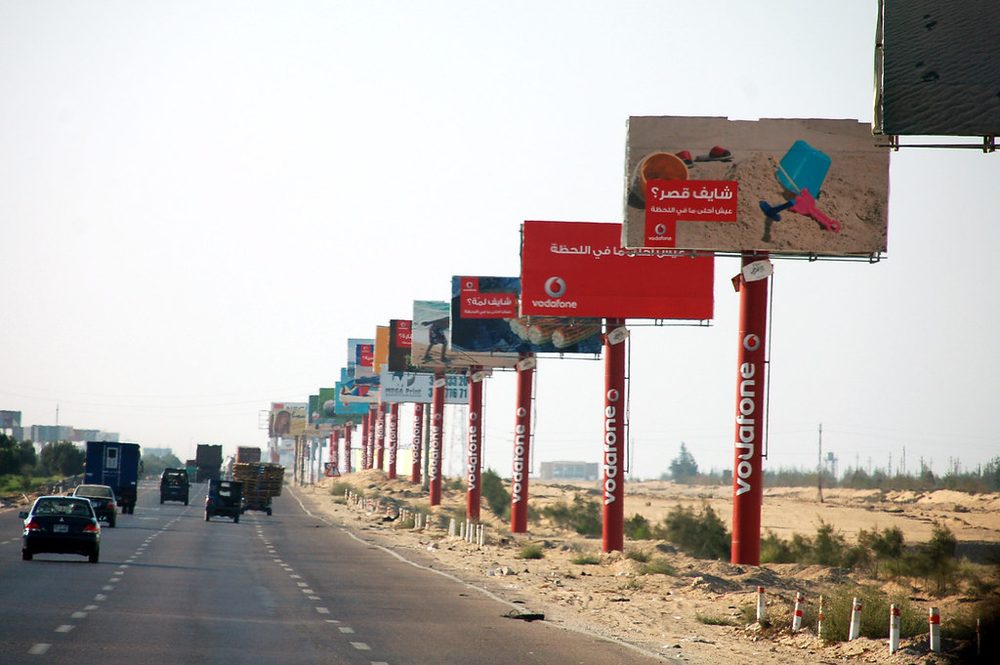
The shift toward local search and email is deliberate. These channels have clear measurement, relatively fast payback, and low waste. A customer searching for brake service in your zip code is highly likely to convert. A customer who just bought from you and sees a reminder email is also high-intent. Generic brand advertising (TV, radio, billboards) builds long-term awareness but is hard to measure and slow to produce ROI. Most shops of any size now invest in measured channels first, then use brand spend to amplify success.
Budget for Independent Auto-Service Shops and Repair
Independent shops usually operate with lower budgets and higher reliance on repeat business. A good strategy allocates roughly 25-30% to Google Business Profile optimization and local search ads (very high ROI for service shops because search intent is strong). 20-25% to email and SMS reminders for repeat customers and maintenance schedules (this drives revenue with almost zero customer acquisition cost). 20-25% to Facebook and Instagram for local brand presence and seasonal promotions. The remainder might go to referral programs, loyalty discounts, or local partnerships with insurance companies and fleet operators.
For independent shops, the math often favors retention over acquisition. Keeping an existing customer is 5-10 times cheaper than finding a new one. So a significant portion of budget should go to reminders (email, SMS, postcards) that bring people back for oil changes, tire rotation, and seasonal maintenance. A customer who visits twice a year at $150 per visit generates $300 annual revenue with no acquisition cost once they're in your system.
Set Annual Budget and Monthly Monitoring
Start by deciding your total marketing spend as a percentage of projected annual revenue. Many healthy shops spend 2-4%, dealerships 3-6%, depending on growth stage and local competition. If your shop will do $500,000 in service revenue and you allocate 3%, that's $15,000 per year or $1,250 per month. Assign that money to channels based on your allocation plan: $300-400 to Google Ads, $250-300 to Facebook, $200-250 to email and retention, etc. The exact split depends on your current performance.
Set a system to review performance monthly. Which channels brought the most leads at the lowest cost? Which closed at the highest rate? Which have gone stale? If Google Local Service Ads are bringing leads at $60 and closing at 20%, and Facebook is bringing leads at $90 and closing at 8%, you might shift budget from Facebook to Google. If email campaigns to past service customers generate service appointments at near-zero cost, that's your best ROI: invest more there.
Don't change channels on a whim. Give any new channel at least 2-3 months and a budget of at least $500-1,000 to prove itself. Some channels take time to generate trust and repeat traffic. But be ruthless about channels that consistently underperform. If a channel produces no measurable leads for three months, pause it and reallocate.
- Set total annual budget as a percentage of projected revenue (2-6% depending on business type)
- Divide budget by month and allocate to specific channels based on past performance
- Track leads, closes, and cost-per-sale for each channel every month
- Test new channels with small budgets; require proof before scaling
- Cut channels that don't produce measurable leads or sales within 90 days
Common Budget Mistakes to Avoid
Most shops and dealers make a few predictable errors. First, they spend on vanity metrics. A Facebook campaign with 5,000 impressions feels successful, but if those 5,000 people don't visit your shop or call, the impressions are worthless. Focus on cost-per-lead and cost-per-sale, not clicks or likes. Second, they keep spending on channels out of inertia. The radio ad has been running for five years, so it must work. But does it? If you can't trace a single customer to it, stop. Third, they treat online and offline tracking as too hard and give up. This is self-defeating. You don't need perfect data; just consistent, honest data. Even a rough CRM note (Google Search, Facebook, Referral, Walk-in) is infinitely better than none.
A fourth mistake is underfunding measurement and strategy. You can't optimize what you don't measure. If you're spending $15,000 per year on marketing but $0 on a CRM, analytics tool, or review management system, you're flying blind. A basic CRM or Google Business Profile optimization costs $250-500 per month and typically pays for itself by clarifying which leads are real and where they come from. Fifth, shops try to do everything at once. Facebook, Google, email, reviews, TikTok, local events. You spread yourself thin and don't master any one channel. Start with two: local search (Google) and one paid digital channel (Facebook or Google Ads). Prove ROI. Then expand.
Tools and Help: What You May Need
You don't need expensive tools to start, but some are worth the investment. A CRM or dealership management system that tracks lead source and sale outcome is essential; most auto shops already have one. Google Business Profile is free and critical for local search visibility. Google Analytics (free) shows you how customers find your website. Call tracking software (typically $50-100 per month) gives you the unique phone numbers for attribution. For shops using email, an affordable email platform runs $30-100 per month depending on list size.
Beyond DIY tools, you may want help. If you're spending $15,000+ per month on marketing or have complex multi-location attribution, a fractional CMO or marketing consultant who understands auto retail can save time and money by auditing your spend, identifying leaks, and recommending reallocation. They should show you clear ROI on their advice within 3-6 months. If you're drowning in managing Google Ads, Facebook, email, and SEO, an agency or managed service can free you to focus on sales and customer service. The key is to know what you're paying for: strategy and optimization, not just ad spend passthrough.
See exactly what each Fracmo plan ships. Every deliverable and every price is public: $249, $999 and $2,490 a month, month-to-month, with no discovery call to see a number.
See Fracmo pricing →Keep reading
- What is a fractional CMO?: the plain-English 2026 guide
- Fractional CMO cost in 2026: real numbers, including ours
- AI CMO vs fractional CMO: how the models actually differ
- Compare Fracmo to agencies, in-house hires and DIY tools
- Fracmo's CRM for car dealers, workshops and auto-service shops: pre-configured pipeline, booking and KPIs for the vertical
- All Fracmo blog guides